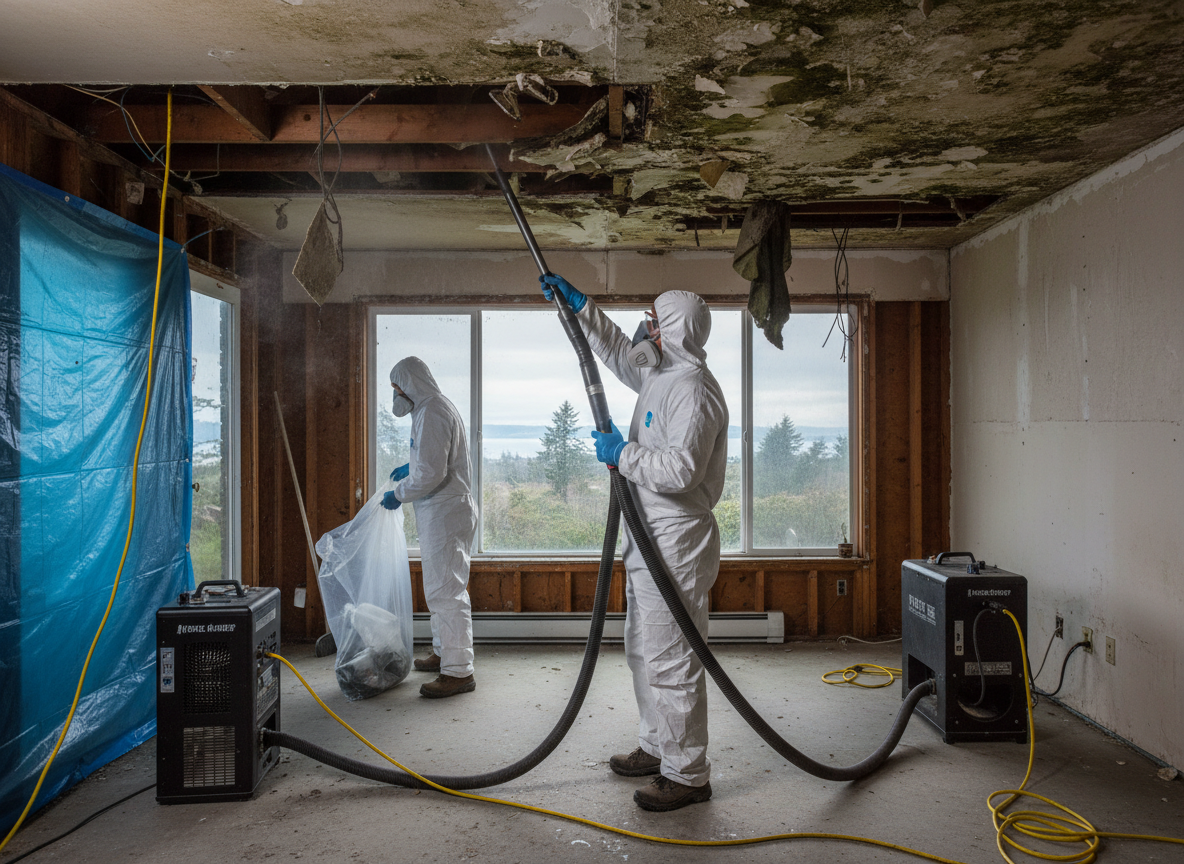
Camano Island homes built before the 1990s in neighborhoods like Utsalady and Camano City often feature crawl spaces and cedar siding that trap moisture during the long wet winters typical of Island County. When rain soaks the ground near Cama Beach State Park, water migrates under foundations and feeds hidden mold colonies on subfloor joists. A 24 hour mold removal crew must first isolate the affected wing with containment barriers before negative-air machines can pull spores away from living spaces, because the mild marine climate keeps relative humidity high even in dry summers.
Stanwood and Arlington commuters who own weekend places on Madrona Beach frequently discover black mold after a roof leak goes unnoticed for weeks. The 24 hour response window matters because mold on gypsum board can release mycotoxins within 48 hours once temperatures stay above 55 degrees, which happens often here. Technicians cut out saturated drywall in one-foot margins beyond visible growth, then treat the exposed framing with EPA-registered antimicrobials while HEPA vacuums capture loosened spores that would otherwise drift into adjacent rooms.
Island County building practices from the 1970s left many Camano Island houses with minimal vapor barriers under slabs. When groundwater rises after heavy November rains, mold appears along baseboards in finished basements. During 24 hour mold removal, crews must document moisture meter readings at multiple depths in the concrete before any reconstruction begins, because residual dampness will restart growth within months if the slab is not properly dried with industrial dehumidifiers.
Access roads around Camano Island State Park can flood during winter storms, delaying equipment delivery. Experienced crews stage portable generators and extra containment sheeting at the 370 NE Camano Dr shop so work can start the moment a call comes in, regardless of road conditions between Stanwood and the island.
Technician insight
In Camano Island, the thing that catches most people out with 24 hour mold removal is the way cedar shake siding on 1970s homes in Madrona Beach holds water against the sheathing long after the rain stops. Homeowners see a small spot inside and think it is contained, but the real growth is often between the siding and the house wrap because the mild marine climate never lets the wood dry fully.
Hidden Growth After Roof Leak in Camano City
A Camano City homeowner noticed a ceiling stain after a December storm. Inspection revealed mold extending two feet into the attic insulation and along rafters. The crew contained the attic, removed wet insulation, treated the rafters, and ran dehumidifiers for three days until readings dropped below 12 percent. Clearance testing passed and the homeowner returned to a dry, odor-free house.
How it works
- 1
Initial Assessment
Technician arrives within hours, maps visible growth, and uses moisture meters on walls and floors in Utsalady or Camano City homes.
- 2
Containment Setup
Plastic barriers and negative air machines isolate the work zone to prevent spores from reaching unaffected rooms.
- 3
Removal and Cleaning
Affected materials are cut out and bagged; framing is treated and HEPA vacuumed before industrial drying begins.
- 4
Verification and Clearance
Post-remediation inspection confirms moisture levels and air quality meet safe standards before barriers come down.
Pricing
Pricing varies by square footage affected, depth of hidden growth, and drying time required after wet winters; upfront quotes given on site.