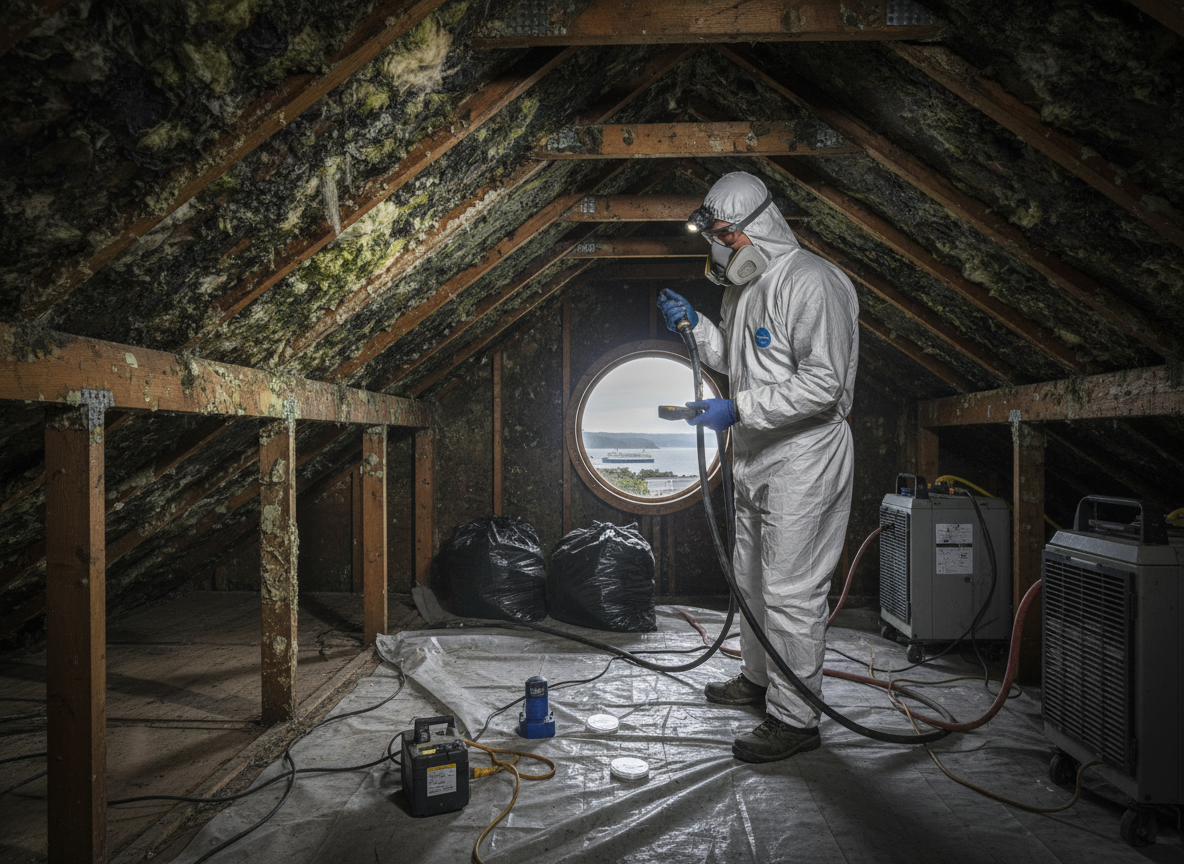
Attic mold develops readily in Camano Island homes because the mild marine climate brings prolonged winter rains that drive moisture through roof vents and underlayment. Older housing stock around Utsalady and Camano City often features limited ridge venting and single-layer insulation that traps humidity against sheathing. Testing begins with moisture mapping and air sampling to locate hidden growth behind insulation without disturbing settled spores. Removal requires containment barriers, HEPA vacuuming, and antimicrobial treatment of rafters while protecting existing electrical runs and HVAC ducts that run through many Island County attics.
Homeowners near Cama Beach State Park and Madrona Beach frequently discover mold after noticing musty odors during the first dry summer weeks when windows are opened. The transition from wet winters to dry summers creates rapid drying that can crack wood and push spores into living spaces below. Technicians inspect for ice-dam remnants from prior winters and check soffit intake paths that become clogged with needles from nearby evergreens. Proper removal includes replacing saturated insulation batts with mold-resistant material and ensuring ridge vents remain clear so future condensation does not reform on the north-facing roof planes common in these neighborhoods.
Stanwood and Arlington residents who commute to Camano Island sometimes overlook attic issues until water stains appear on bedroom ceilings. Because many homes sit on sloped terrain with crawlspaces that stay cool year-round, temperature differentials push moist air upward into the attic during winter. Removal work must account for limited access points in older Camano City construction and the need to work around knob-and-tube wiring still present in some structures. Post-remediation verification includes repeat moisture readings and clearance sampling to confirm levels have returned to normal before insulation is restored.
Technician insight
In Camano Island, the thing that catches most people out with Attic mold testing and removal is how the wet winters push moisture under the eaves of homes in Utsalady and Madrona Beach, especially where older insulation has settled and blocked the soffit vents that are supposed to keep air moving.
Hidden Growth After Roof Leak in Camano City
A homeowner noticed ceiling discoloration after heavy winter rain. Inspection revealed mold along the north rafters where water had wicked under the felt paper. Containment was installed, saturated insulation removed, and rafters treated before new insulation was placed and clearance samples passed.
How it works
- 1
Initial Inspection
Technicians arrive within hours, perform moisture readings, and collect surface and air samples from the attic space.
- 2
Containment Setup
Plastic barriers and negative air machines isolate the attic to prevent spore migration into living areas during removal.
- 3
Mold Removal
HEPA vacuuming, brushing of rafters, and removal of affected insulation occur while protecting wiring and ducts.
- 4
Drying and Treatment
Dehumidifiers and air movers dry the space, followed by application of EPA-registered antimicrobial on wood surfaces.
- 5
Clearance Testing
Post-work sampling confirms mold levels are within normal range before barriers are removed and insulation is replaced.
Pricing
Cost depends on attic size, extent of growth, and insulation replacement needs; upfront quotes provided after inspection.