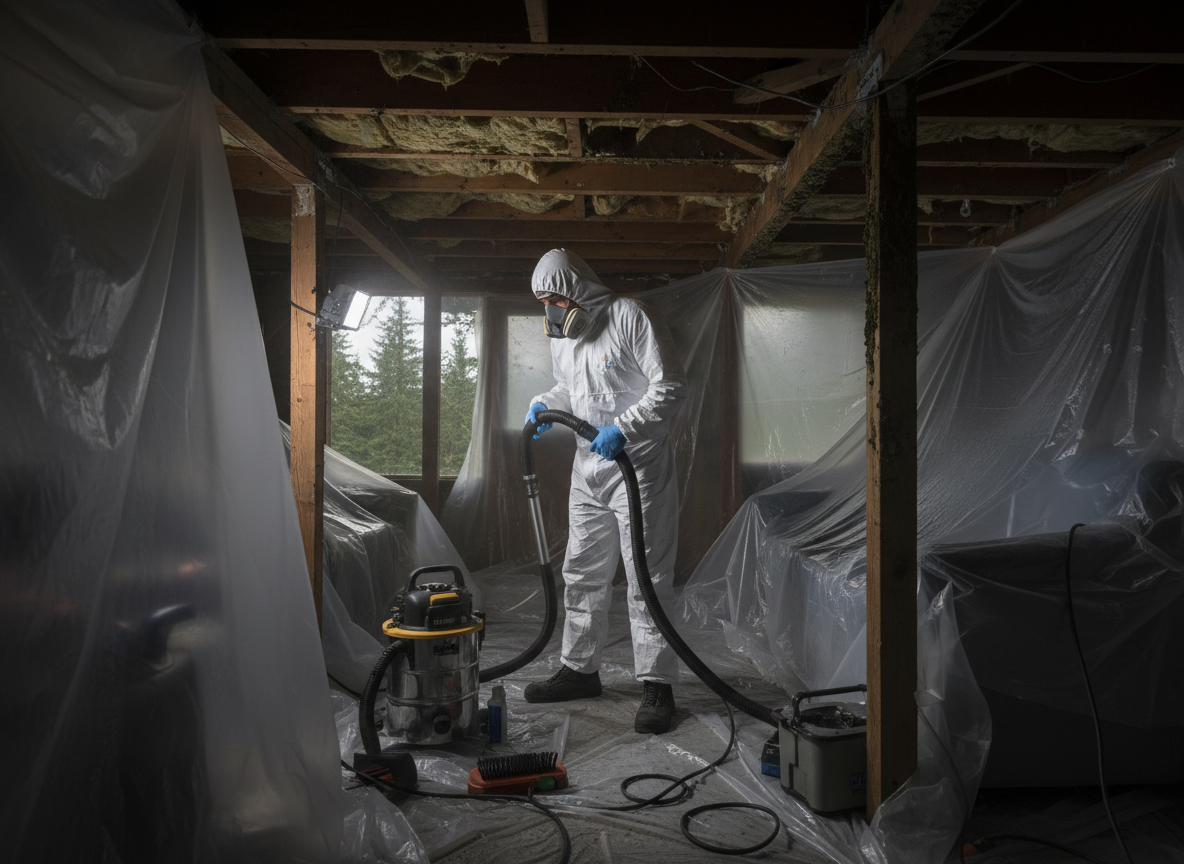
Camano Island homes in neighborhoods like Utsalady and Camano City often feature crawl spaces and cedar siding that trap moisture during the region's wet winters. The mild marine climate keeps relative humidity elevated even through dry summers, allowing mold to establish in attics, wall cavities and under floor joists. Abatement crews must account for limited access points typical of homes built before widespread use of vapor barriers and modern ventilation standards common in Island County.
Cama Beach State Park and Camano Island State Park sit near many residential pockets where wind-driven rain and fog contribute to persistent dampness. Abatement work frequently involves negative air machines and HEPA filtration to prevent spore migration into living spaces during removal. Technicians also inspect for hidden growth behind insulation in Madrona Beach properties, where soil contact and poor grading around foundations accelerate water intrusion after heavy seasonal rains.
Nearby Stanwood and Arlington residents sometimes cross the bridge for service because local crews understand how the island's terrain funnels runoff into lower lots. Containment protocols differ from mainland jobs because many Camano homes lack the open layouts that allow easy plastic sheeting setups. Post-remediation verification focuses on moisture meter readings in framing lumber that stays damp longer due to the surrounding saltwater influence.
Proper disposal of contaminated materials follows Island County guidelines to avoid cross-contamination at the local transfer station. Crews document each step with photos because homeowners in these older neighborhoods often need records for insurance claims tied to repeated winter leaks.
Technician insight
In Camano Island, the thing that catches most people out with mold abatement is how cedar siding on pre-1990 homes in Utsalady and Camano City hides growth that travels along the sheathing because the marine climate never fully dries the wood during winter.
Hidden Growth in Crawl Space
A Camano City homeowner noticed musty odors after heavy winter rains. Inspection revealed mold along floor joists where grading directed water under the house near Madrona Beach. Crews contained the space, removed affected insulation, treated framing, and installed a vapor barrier to manage ongoing moisture from the island's wet season.
How it works
- 1
Initial Assessment
Technician inspects affected areas in crawl spaces, attics and wall cavities using moisture meters and visual checks for growth patterns common after wet winters.
- 2
Containment Setup
Plastic barriers and negative air machines isolate the work zone to prevent spore spread into living areas of Camano Island homes.
- 3
Removal and Cleaning
Contaminated materials are removed, surfaces are treated with EPA-registered antimicrobials, and HEPA vacuuming follows in Utsalady and Madrona Beach properties.
- 4
Drying and Verification
Dehumidifiers and air movers reduce moisture levels, followed by post-remediation testing before barriers come down.
Pricing
Pricing varies by square footage affected, access difficulty in older Island County homes, and extent of hidden growth; call for an upfront quote.