Camano Island homes in neighborhoods like Utsalady and Camano City often sit on slopes or near the water where winter rains pool against foundations. The mild marine climate brings repeated wetting and drying cycles that push moisture into crawlspaces and wall cavities of 1970s and 1980s construction common here. When dry summers arrive, hidden growth can still expand behind siding or under decks because the initial water source was never fully addressed. Remediation crews must map every moisture path from rooflines down to soil contact points before any removal begins.
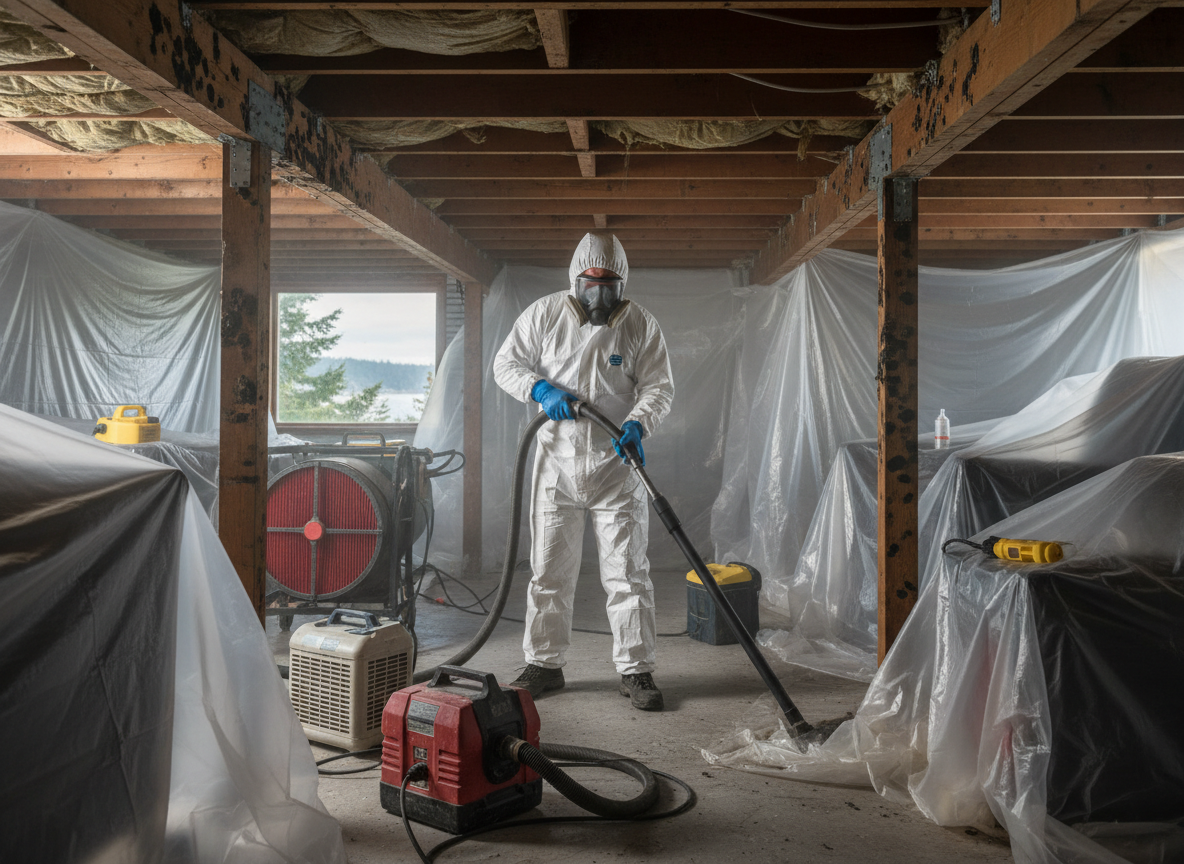
Properties near Madrona Beach and Cama Beach State Park frequently show mold after heavy winter storms when gutters overflow and water migrates under porches. Older single-story houses with pier-and-beam foundations allow air to circulate under floors, yet that same airflow can carry spores into living spaces once drywall gets wet. Technicians check attic ventilation and insulation levels because the dry summer months can mask ongoing condensation behind vapor barriers. Containment barriers and negative air machines are set before any material is disturbed to keep spores from reaching adjacent rooms.
Stanwood and Arlington residents call for help when mold appears after roof leaks or plumbing failures that go unnoticed during the long wet season. Island County homes often lack modern vapor retarders, so crews must remove affected insulation and treat framing with antimicrobial solutions that meet local building practices. Post-remediation moisture readings confirm the structure is dry before new materials are installed. Every job includes a written report of affected areas and the steps taken so homeowners have documentation for insurance or future sales.
Technician insight
In Camano Island the thing that catches most people out with mold remediation near me is how winter rain follows the slope of the land right under older pier-and-beam homes in Utsalady and Madrona Beach; once the soil stays saturated for weeks the floor joists stay damp long after the surface looks dry, and homeowners often miss it until the smell reaches the living room.
Crawlspace Growth After Winter Storms
A Camano City homeowner noticed a musty odor in the hallway after several weeks of rain. Inspection found standing water under the pier-and-beam floor that had wicked into the subfloor and insulation. Crews contained the space, removed wet materials, treated the joists, and installed a vapor barrier before drying. Moisture readings stayed below 12 percent on final check.
How it works
- 1
Initial Inspection
Technician arrives within hours, checks all moisture-prone zones including crawlspaces and attics, and identifies the water source.
- 2
Containment Setup
Plastic barriers and negative air machines isolate the work area to prevent spore spread into unaffected rooms.
- 3
Removal and Cleaning
Damaged materials are removed, surfaces are cleaned with appropriate solutions, and remaining structure is treated.
- 4
Drying and Verification
Dehumidifiers and air movers dry the space, followed by moisture meter checks and a final walkthrough with the homeowner.
Pricing
Cost depends on square footage affected, access difficulty in crawlspaces or attics, and whether additional drying equipment is required; upfront written quotes provided before work starts.