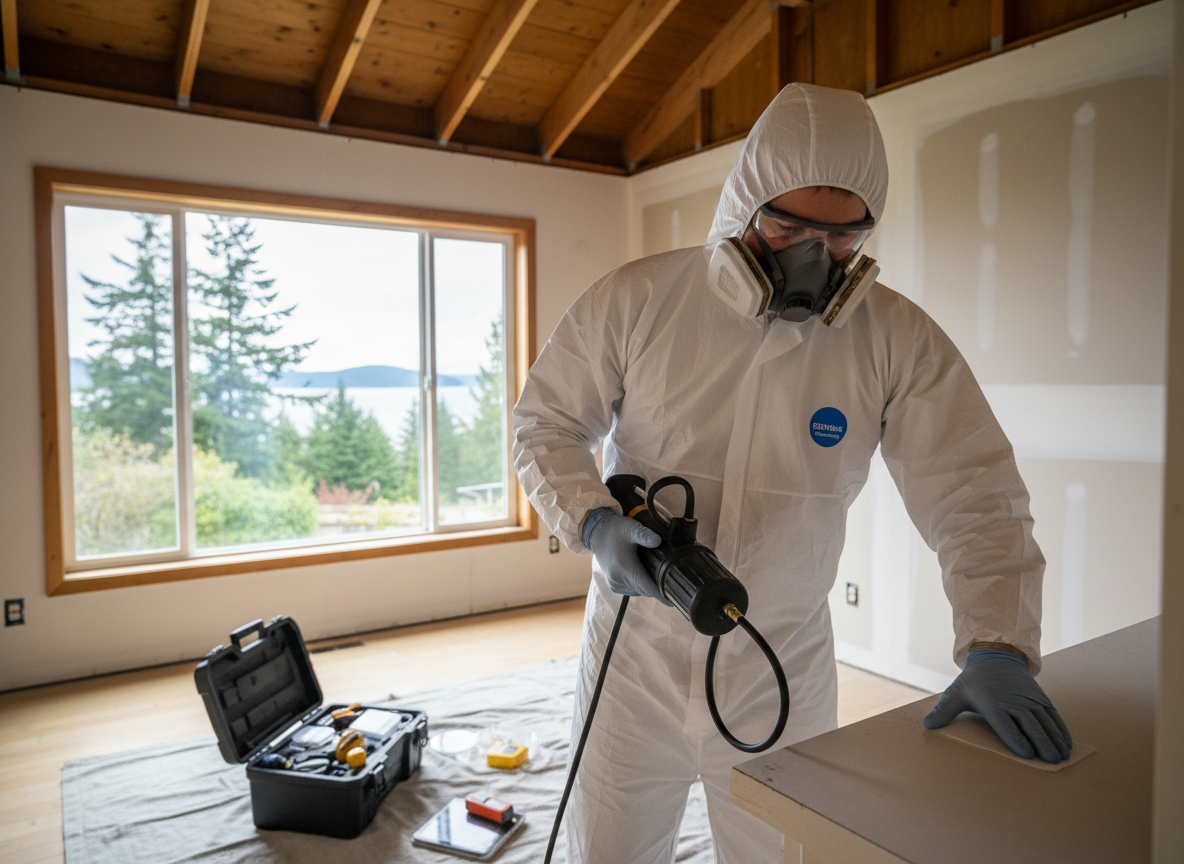
Post remediation mold testing on Camano Island checks that mold levels have returned to normal after removal in Island County homes. Wet winters in the mild marine climate often leave residual moisture in crawlspaces and attics of older houses in Utsalady and Camano City, so technicians take air and surface samples from multiple zones including living areas, basements, and exterior walls facing the water. Results compare against outdoor control samples and indoor baselines to confirm no active growth remains before occupants return.
Testing follows a structured protocol that accounts for dry summers allowing hidden pockets of dampness to persist behind drywall or under flooring near Cama Beach State Park. Homes in Madrona Beach frequently show elevated readings in bathrooms and laundry rooms due to salt air corrosion on vents, requiring targeted tape lifts and spore trap analysis. Reports detail exact locations, spore types, and clearance thresholds so owners know the space meets habitability standards before final sign-off.
Edge cases include properties close to Stanwood or Arlington where shared wells or seasonal flooding from Island County terrain can reintroduce moisture weeks after initial work. Technicians inspect HVAC systems and insulation for cross-contamination, noting any code requirements for ventilation upgrades in older stock. This step prevents callbacks when humidity spikes again during the next wet season.
Technician insight
In Camano Island, the thing that catches most people out with post remediation mold testing is hidden moisture trapped in the crawlspaces of older homes along the west side near Cama Beach State Park. Wet winters keep the ground saturated and dry summers let surface readings look fine while deeper insulation stays damp, so a single round of samples often misses it unless you pull up floor registers and check under the house.
Clearance Testing After Bathroom Leak Repair
A Camano City home showed recurring musty odors after a shower leak fix. Samples from the master bath and adjacent bedroom walls revealed elevated Aspergillus levels behind the baseboards. Additional targeted removal and drying followed by retesting brought spore counts in line with outdoor controls, allowing safe reoccupancy.
How it works
- 1
Initial Assessment
Review prior remediation scope and inspect affected zones in the Camano Island home for any missed moisture sources.
- 2
Sample Collection
Gather air, surface, and bulk samples from treated rooms plus control locations outdoors and in unaffected areas.
- 3
Laboratory Analysis
Send samples for independent lab review to measure spore counts and identify any remaining mold species.
- 4
Report and Clearance
Deliver written findings with specific recommendations if levels exceed safe thresholds for reoccupancy.
Pricing
Cost depends on home size, number of samples required, and access conditions in Island County properties.