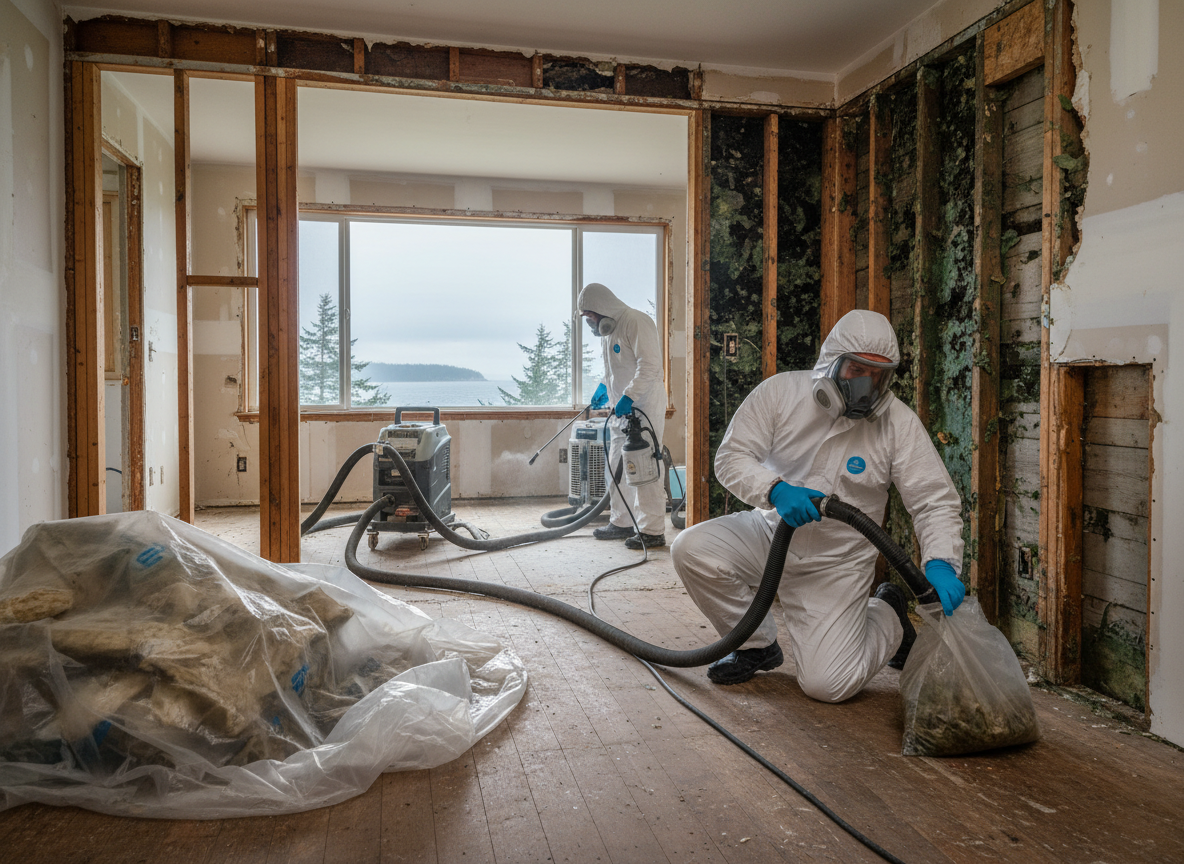
Water damage mold remediation on Camano Island starts with tracing moisture back to its source, whether from roof leaks common in the wet winters or foundation seepage near Cama Beach State Park. Homes in neighborhoods like Utsalady and Madrona Beach often feature older cedar siding and crawlspaces that hold humidity long after the dry summers begin, allowing hidden growth behind walls and under floors. Technicians map affected zones with moisture meters before any removal to avoid spreading spores into living areas connected to Camano Island State Park trails and nearby Stanwood properties.
Island County building practices from past decades left many Camano City residences with limited ventilation and single-pane windows that condense during prolonged winter rains. This creates edge cases where mold travels through HVAC ducts or settles in attics above living spaces. Remediation crews isolate these paths with negative air machines and HEPA filtration, then remove saturated drywall and insulation while protecting adjacent surfaces that could otherwise absorb spores during the job.
After extraction, drying protocols account for the marine climate's high baseline humidity, which slows standard timelines compared to inland areas like Arlington. Crews monitor readings daily until levels match surrounding dry materials, then apply antimicrobial treatments only where wood framing shows active growth. Homeowners receive guidance on preventing recurrence through improved grading around foundations that sit close to the water table in low-lying sections of the island.
Final clearance testing confirms spore counts have returned to outdoor baselines before any reconstruction begins. This step matters in Camano Island because returning moisture from the next wet season can restart the cycle if hidden pockets remain untreated. Documentation of each phase helps owners coordinate with insurers when claims involve water intrusion from storms affecting the broader Stanwood and Arlington region.
Technician insight
In Camano Island, the thing that catches most people out with water damage mold remediation is how the wet winters push moisture deep into the crawlspaces of 1970s-era homes in Camano City, where poor original grading lets water sit against the foundation until it migrates upward through subfloors.
Crawlspace Intrusion After Winter Storms
Water entered a Camano City home through an unsealed foundation vent during heavy seasonal rains. Inspection revealed mold along joists and insulation that had wicked moisture from the saturated soil. Crews contained the space, removed affected materials, dried the structure over several days, and confirmed clearance before owners sealed the vents for the next wet season.
How it works
- 1
Initial Assessment
Technicians arrive within hours to inspect water intrusion points, test moisture levels in walls and floors, and identify mold extent in crawlspaces or attics typical of Camano Island homes.
- 2
Containment Setup
Plastic barriers and negative air pressure isolate the work zone to prevent spores from reaching unaffected areas in Utsalady or Madrona Beach residences.
- 3
Removal and Cleaning
Saturated materials are removed, surfaces are HEPA-vacuumed and treated, and HVAC systems are cleaned if ducts carried moisture from winter rains.
- 4
Drying and Verification
Industrial dehumidifiers run until readings stabilize, followed by air sampling to confirm remediation success before any rebuilding.
- 5
Prevention Recommendations
Owners receive specific advice on ventilation upgrades and grading fixes suited to the island's terrain and marine climate patterns.
Pricing
Upfront quotes based on inspection findings, with costs varying by square footage affected and access challenges in older Island County homes.