2026-10-23 ·
Recognizing Mold After Heavy Winter Rains On Camano Island
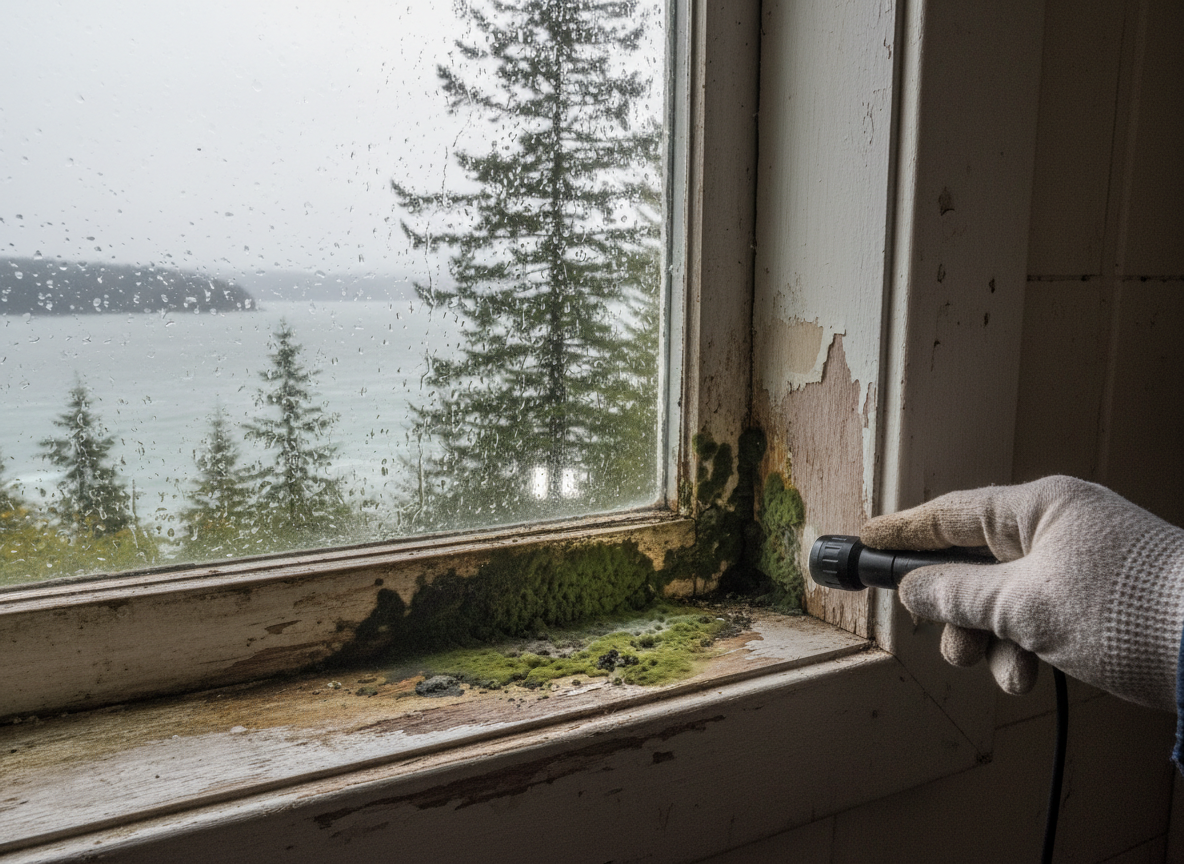
Heavy winter rains on Camano Island typically produce visible mold colonies within 48 to 72 hours in homes with crawl spaces or attics that lack proper ventilation. The mild marine climate delivers repeated moisture that soaks into older Island County housing stock, especially structures built before modern vapor barriers became standard. Residents in Utsalady and near Camano Island State Park see water intrusion along rooflines and foundation walls first because those areas sit close to the shoreline and receive direct wind-driven rain.
Moisture Patterns Unique to Camano Island Winters
Camano Island receives most of its annual rainfall between November and March, with dry summers offering little natural drying. This cycle saturates soils around homes in Camano City and Madrona Beach, pushing groundwater against crawl space walls. Terrain slopes toward the water in many lots near Cama Beach State Park, so runoff pools against siding and enters through small gaps. Older homes in these neighborhoods often feature vented crawl spaces that pull humid air inward during storms, creating conditions where mold colonies establish on joists within days. Nearby Stanwood and Arlington experience similar patterns, but Camano's island location means wind exposure is higher and drying times longer after each front passes.
Visible Signs on Interior Surfaces
Dark staining along baseboards in bathrooms and laundry rooms appears first after prolonged rain. On Camano Island, homeowners notice fuzzy growth on drywall corners in bedrooms located above crawl spaces, particularly in Utsalady properties where the water table sits close to the surface. Musty odors intensify near closets and under sinks when relative humidity stays elevated for weeks. In homes close to Camano Island State Park, exterior walls facing prevailing winter winds show peeling paint and soft drywall within a month of heavy storms. These indicators differ from summer conditions because the consistent moisture prevents natural evaporation that would otherwise limit colony size.
Hidden Growth in Crawl Spaces and Attics
Crawl spaces under 1960s and 1970s homes in Camano City frequently develop mold on insulation and subflooring after winter rains because original vents allow moist air to circulate. Attics in Madrona Beach houses show black spotting on roof sheathing when roof leaks combine with poor ridge ventilation. Residents can check these areas by looking for condensation on pipes and discolored wood, but professional assessment becomes necessary once odors reach living spaces. Water damage mold remediation addresses the combined issues of saturation and growth that develop in these hidden zones.
When to Arrange Inspection
If staining or odors persist more than one week after rains end, schedule a mold inspection to map affected materials before colonies spread to adjacent rooms. Island County homes near Lost Lake or Elger Bay often require targeted checks in low-lying sections where drainage is slow. Early detection limits the scope of work and protects indoor air quality during the long wet season. Read more about related storm impacts in When Island Storm Flooding Leads To Mold On Camano Island.